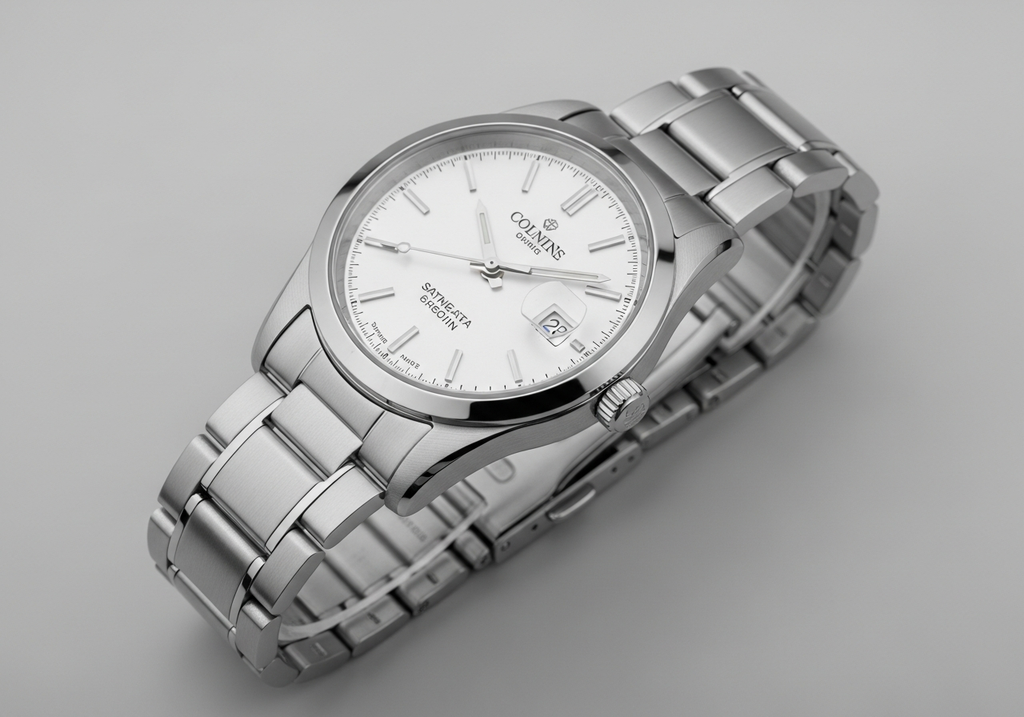
Choosing a watch for daily wear can feel surprisingly overwhelming. Prices span an enormous range, technical terms like automatic movement, sapphire crystal, and water resistance ratings get thrown around without context, and hundreds of brands compete loudly for attention.
What Makes a Watch “Everyday-Ready”
Categories like pilot and tool watches — where breitling watches serve as one well-known example among many — show how durability-focused engineering translates into genuine, practical functionality. This guide cuts through the noise by focusing on the objective factors that determine real-world performance, regardless of brand or budget.
An everyday watch strikes a balance across four core criteria:
- Durability — resistance to scratches, shocks, and water
- Legibility — readable at a quick glance
- Comfort — appropriate size, weight, and strap choice
- Versatility — suitable across casual and semi-formal settings
This is what separates a true daily wearer from a dress watch (typically thinner and far less water-resistant) or a highly specialized sports piece. Function-first thinking matters most here: reliability and ease of use consistently outweigh aesthetics or brand recognition.
Watch Movements: How Your Watch Keeps Time
The movement is the engine that powers a watch, and understanding the three main types makes a real difference when comparing options:
- Quartz: battery-powered, accurate to within a few seconds per month, and essentially low-maintenance
- Mechanical (manual wind): driven by a wound mainspring, requires regular hand-winding, and is widely valued for its craftsmanship
- Automatic (self-winding): winds through natural wrist motion and is popular in tool and sports watches, though accuracy can vary by several seconds per day
For a busy professional who travels frequently, quartz offers a practical “set and forget” reliability that’s hard to argue with. Automatic movements appeal to those who genuinely appreciate traditional horology, though they do require periodic servicing. Exact accuracy and service intervals will always depend on the specific movement and manufacturer specifications.
Materials That Affect Durability and Comfort
Case material largely determines how a watch holds up under daily use. Stainless steel remains the industry standard — corrosion-resistant and broadly practical. Titanium is noticeably lighter and hypoallergenic, a meaningful advantage when wearing a larger case all day. Ceramic bezels handle scratches well but can be brittle under a sharp impact. Surface coatings like PVD add hardness, though they tend to show wear at contact points over time.
The watch crystal is the clear barrier protecting the dial. Acrylic absorbs impacts reasonably well but scratches easily. Mineral glass is more scratch-resistant and appears commonly in mid-range watches. Sapphire crystal — the hardest of the three — handles everyday abrasion with ease, though it can still crack under sufficient force.
Strap choice deserves equal consideration. Metal bracelets hold up well against water and physical activity; rubber suits sports use; leather is comfortable but degrades with prolonged moisture exposure. Opting for watches with standard lug widths keeps strap replacement simple and affordable over the long term.
Water Resistance: Understanding the Ratings
Water resistance ratings reflect controlled laboratory test conditions — not prolonged, real-world depth exposure. Here’s a practical breakdown:
- 30 m: splashes and handwashing only
- 50 m: brief swimming is acceptable
- 100 m and above: suited for regular swimming and more active water exposure
Key Takeaway: For most everyday scenarios, a minimum of 50–100 m provides reasonable peace of mind. Always ensure the crown is fully secured before any water contact, and have gaskets inspected during servicing — they degrade naturally over time and are easy to overlook.
Legibility, Size, and Fit
Legibility comes down to dial contrast, hand thickness, and luminescence for low-light conditions. Many tool and aviation watches prioritize bold, high-contrast dials precisely for this reason — readability isn’t just a convenience, it’s part of the design philosophy.
Case diameter, thickness, and lug-to-lug length all influence how a watch actually sits on the wrist. A watch that shifts around or catches on objects is simply more likely to sustain damage over time.
Practical Tip: Measure a watch you already find comfortable and use those dimensions as your baseline when evaluating new models. It takes thirty seconds and saves a lot of guesswork.
Build Quality and Long-Term Ownership
Solid construction reveals itself in the details: precise alignment of hands and indices, smooth crown action, well-finished bracelet links, and consistent surface treatment throughout. These markers hold true across price levels — good build quality isn’t reserved for expensive watches.
Serviceability is an underrated part of the durability equation. Before buying, it’s worth considering whether qualified watchmakers are accessible in your area, what service intervals the manufacturer recommends, and whether replacement parts are readily available. Mechanical watches typically require more frequent — and more costly — servicing than their quartz counterparts.
Making a Confident, Informed Choice
Ultimately, a durable everyday watch comes down to matching movement type, materials, water resistance, legibility, fit, build quality, and serviceability to your actual lifestyle. An office-based professional has genuinely different requirements than someone who works outdoors or moves through varied climates regularly.
Key Takeaways:
– Aim for at least 50–100 m water resistance for general daily use
– Sapphire crystal significantly reduces everyday scratch risk
– Confirm serviceability and parts availability before committing to a purchase
– Ask yourself honestly: “How will I actually use this watch in a typical week?”
No particular brand or passing trend needs to drive the decision. A solid understanding of these technical and practical factors equips any buyer to compare models across price ranges independently — and to choose based on genuine need rather than clever marketing.