For many millennia, jewelry has not only been an adornment. It has been a language without words, a silent signal of lineage, authority, change, and sacred purpose. Culturally, some pieces were imbued with divinity: rings passed through ritual, pendants that provided protection, and bangles that honored rites of passage. There were often figures associated with those symbols; figures who had been elevated, revered, and worshipped for millennia—goddesses, priestesses, and other mythical women, who first etched their tales into metal, stone, and the collective story.
But many of those figures were stripped from the cultural narrative. Their names are rarely spoken. Their power is misconceptualized. Their sacredness was severed. Jewelry made today that harks back to these figures is not just a body decoration. It is the reclamation of an identity, an embodiment of archetypes—archetypes our ancestors had relied on for generations, generations of women.
The Forgotten Pantheon: Where Power Was Once Worn
In ancient Mesopotamia, Inanna—the goddess of love, war, and transformation—was reported to be adorned with jewels that marked her divinity as she descended into the underworld. In Egypt, Hathor’s amulets were said to invoke joy and fertility. In the Indian subcontinent, the goddess Durga, adorned in jewels, performed acts of slaying illusion and restoring dharma to balance in the cosmos. From the Celtic Morrígan to the Orisha Oshun, goddesses were often depicted with the symbols and metals associated with their powers.
In ancient times, ornaments were not secondary; they served as the interface between the divine and the material. There are tangible meanings to adornments: the crescent moon, the spiral of rebirth, the eye that sees beyond the illusion. However, in the retelling of these narratives, much of this has been diluted. Jewelry became commercial. And symbols lost their weight. The female archetype became simplified to aesthetics, a trend, and role copying, aesthetics that were disconnected from their ancient meaning.
Wearing Archetypes: The Feminine in Form
To reclaim this legacy, we first need to recall that archetypes are not merely characters; they are patterns of energy. They live within us as much as they do in myth. The wild, the healer, the mother, the warrior, the oracle—these are not separate states, but aspects of the whole.
By wearing jewelry that evokes long-forgotten goddesses or ancestral symbols, we are externalizing what is already within. A ring engraved with lunar symbols may speak to the intuitive. A pendant with spiral shapes could relate to someone who is undergoing some kind of rebirth. They are no longer just pieces of adornment, but tools of ritual. A portable altar.
This doesn’t require dogma or faith. It requires presence. The awareness that when we wear traditional dress with intention, we are not trying to impress, but instead trying to remember.
Feminine Power Beyond the Commercial
In a world that readily diminishes empowerment to consumption, experiences like these represent a radical shift. It asks us to envision: what if your jewelry isn’t there to complete your outfit but instead, to honor your experience? Or what if a bracelet can be worn not because it is pretty but because it symbolizes and reminds you of the ancestral resilience that flows through your blood?
There is a still, steady power here. To wear pieces of jewelry formed from myth and memory means to refuse erasure. It is a declaration of resistance in a world that often forgets the depth and breadth of the feminine. The feminine, not as a gendered role, but the archetypal force that both births, protects, destroys, and dreams.
In this sense, the material becomes essential. Jewelry made from 925 sterling silver, for example, is durable and noble in its beauty and hierarchical value, and is infused with many symbolic meanings. The value of silver’s lunar energy, with its association to and use in amulets, as well as in currents of protection, has lasted for centuries.
Likewise, gold vermeil—a layer of gold over silver—invokes solar radiance while preserving the silver’s grounding properties. It is a fusion of light and depth, of presence and potency.
A New Myth in Metal
When contemporary jewelry aligns with mythic inspiration, it strikes a delicate balance: it must celebrate the past without replicating it, conjuring symbolism without reducing it to mere imitation. Design does not wish to restage history, but hopes to revive memory. Memory is not held in the mind, but in the sinew.
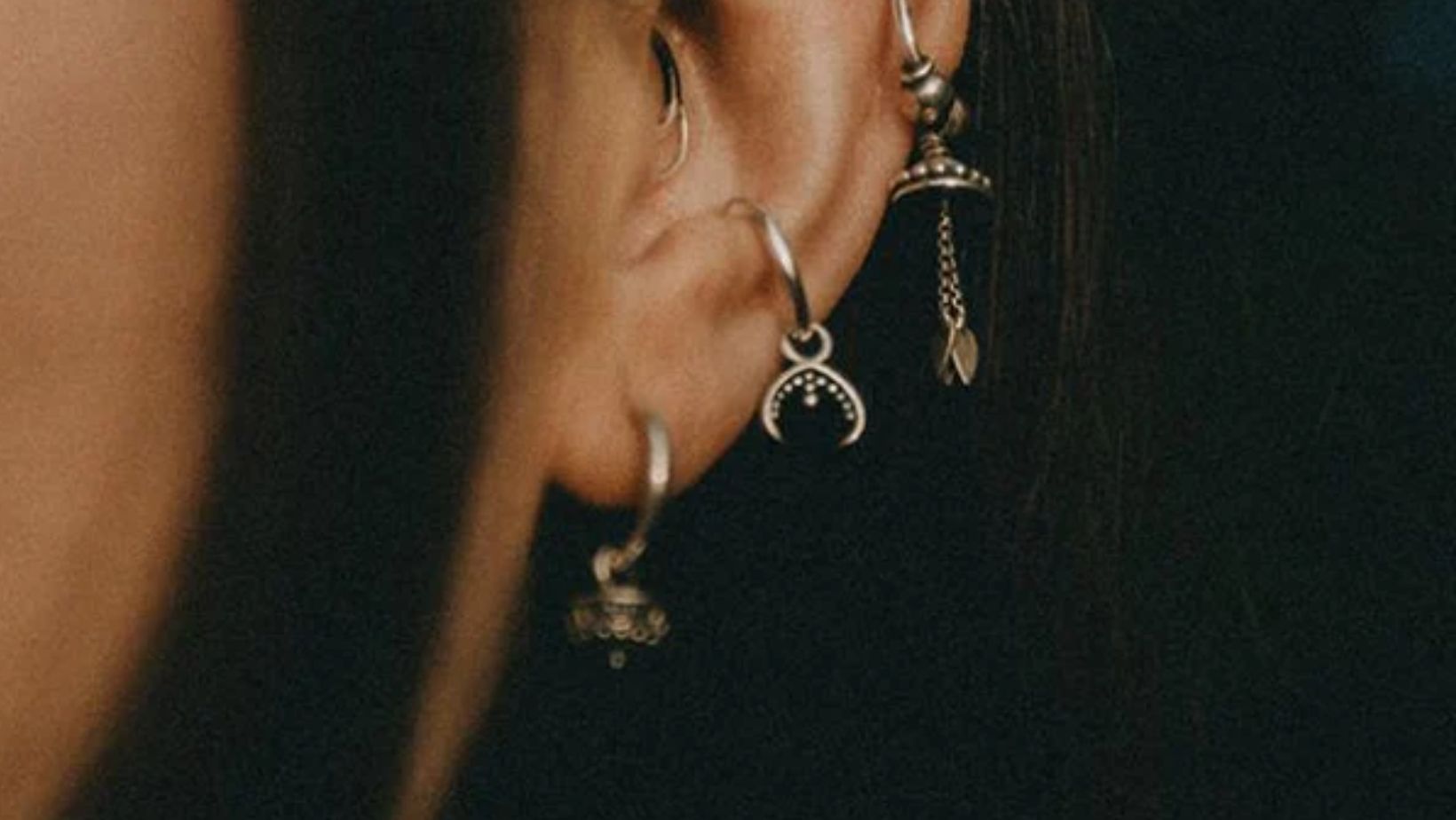
One might not name the goddess to locate her spirit in a piece. The angular cuff might speak to the warrior. The darkened silver talisman might resonate with the mystic. The piece of raw brass, rough and alive, might reflect the maker’s allegiance to texture, to time, to truth.
And notwithstanding that contemporary aesthetics are favouring a frayed and fractured, more meditative and experimental tone, we have started to see what feels like a resurgent, long-lost ceremonial, where jewelry is intended to be more than an accessory, and more likely a presence.
Noir Kalá: Awakening the Forgotten Feminine Through Sacred Design
At Noir Kalá, every piece of jewelry is a summoning, not of trends, but of ancient truths. Rooted in the mythic and the feminine, our brand breathes life back into the goddess’s history, which had been sought to erase. These are not accessories; they are fragments of memory made wearable. Crafted from noble metals like sterling silver, gold vermeil, and raw brass, our designs channel the symbols and spirit of long-forgotten priestesses, oracles, and shapeshifters.
Each curve, edge, and texture speaks in a language older than words—a spiral for rebirth, a crescent for intuition, a darkened talisman for the unseen realms within. To wear our jewels is to reclaim a lineage, to remember power not as dominance but as presence. These are adornments for women who do not wish to perform beauty, but to embody myth, resilience, and sacred return.
Conclusion: The Power We Never Lost
The tales of ancient goddesses and neglected priestesses were not lost, but were waiting to be rediscovered. Waiting for bodies to wear them, for skin to recall what the stone held onto, for metal to remember what it once hummed. To wear jewelry that is in honor of these figures is not to look back but to stand prolonged, to move through the world with a piece of the eternal resting on your collarbone, entwined around your finger, pulsing with it.